

Unlocking the Power of Proof of Concept: A Comprehensive Guide

Understanding the Proof of Concept (POC) Concept

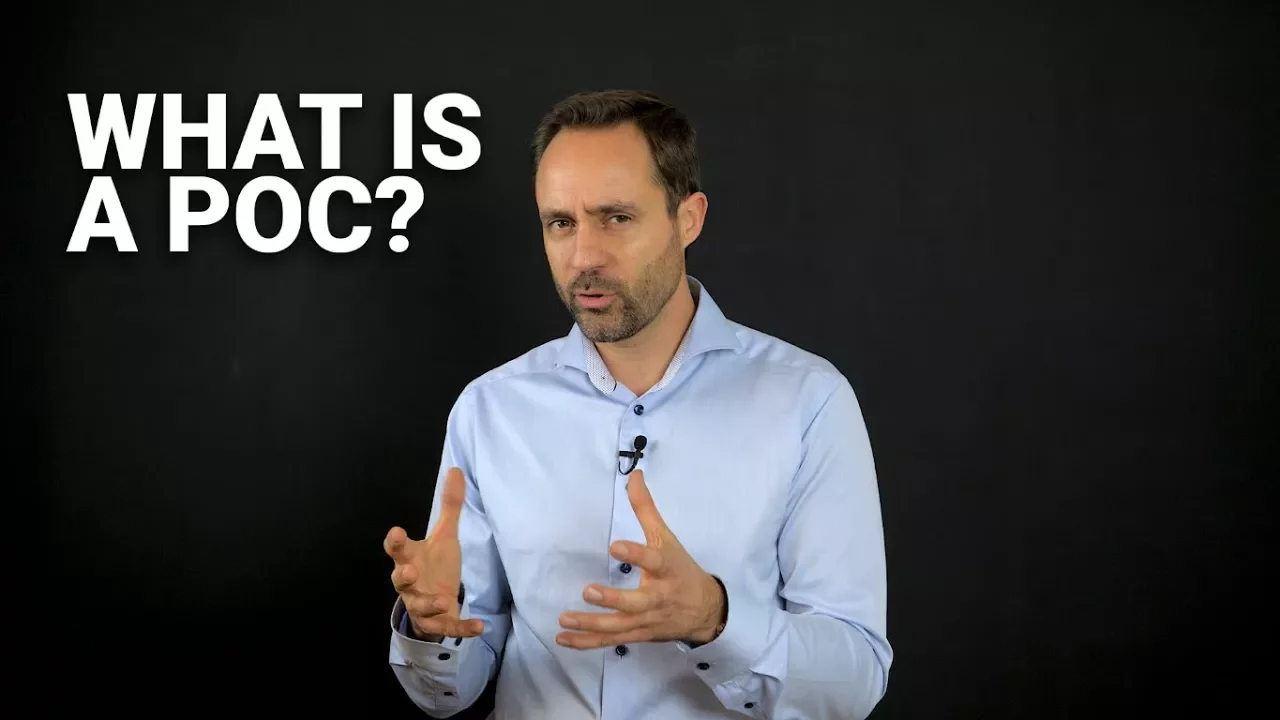
In the ever-evolving world of business, the concept of a Proof of Concept (POC) has become increasingly crucial, especially in the software industry. A POC is a crucial step in the sales process, where a company or organization demonstrates the feasibility and viability of a product or service before committing to a full-scale implementation. As Michael Humblet, the founder of Chaomatic, explains in his video, “POC stands for Proof of Concept. Especially in the software world, when companies that want to buy your software don’t really know if it will fit or it will work or they don’t really trust you. They will ask you to do a proof of concept.” The primary purpose of a POC is to provide potential customers with a tangible demonstration of how a product or service can address their specific needs and challenges. By conducting a POC, companies can gain valuable insights, reduce risks, and build trust with their customers, ultimately leading to a more successful sales process.

Types of Proof of Concept

According to Michael Humblet, there are three main types of proof of concept:

Customer-Oriented POC

  • This type of POC is designed to assess how potential customers would interact with and use the product or service.
  • The company will typically select a small group of customers or users to test a specific feature or functionality of the product.
  • The goal is to gather feedback and insights on the customer experience, user adoption, and overall viability of the solution.

Use Case POC

  • The Use Case POC is focused on demonstrating the impact and return on investment (ROI) that the product or service can deliver.
  • The company will work with the customer to identify a specific use case or scenario where the solution can be applied and measure the potential benefits.
  • This type of POC helps to convince the customer that the product or service can deliver the promised value and impact.

Technical POC

  • The Technical POC is designed to assess the technical feasibility and integration of the product or service within the customer’s existing systems and infrastructure.
  • This POC focuses on testing the compatibility, scalability, and performance of the solution to ensure it can seamlessly integrate with the customer’s technology stack.
  • The goal is to identify and address any potential technical challenges or roadblocks before a full-scale deployment.
By understanding these different types of POCs, companies can tailor their approach to best meet the specific needs and concerns of their potential customers.

The Importance of Proof of Concept

Proof of Concept is a critical step in the sales process for several reasons:

Building Trust and Credibility

When a potential customer is considering a new product or service, they often have doubts or concerns about its capabilities, reliability, and fit within their organization. By conducting a POC, companies can demonstrate their expertise, build trust, and alleviate these concerns. As Michael Humblet notes, “Especially in the software world, when companies that want to buy your software don’t really know if it will fit or it will work or they don’t really trust you. They will ask you to do a proof of concept.”

Reducing Risk and Uncertainty

Implementing a new product or service can be a significant investment for a customer, both in terms of financial resources and organizational disruption. A POC allows them to test the solution in a controlled environment, reducing the risk of a failed implementation and ensuring that the product or service meets their specific needs.

Optimizing the Sales Cycle

While a POC can extend the sales cycle, as Michael Humblet cautions, “the moment you introduce proof of concept, your sale cycle will extend. It will be a lot longer,” it can also lead to a more successful and efficient sales process in the long run. By addressing customer concerns and demonstrating the value of the solution upfront, companies can increase the likelihood of a successful sale and reduce the need for extensive negotiations or rework.

Gathering Valuable Feedback

The POC process provides companies with valuable feedback and insights from their potential customers. This information can be used to refine the product or service, address any pain points, and better align the solution with the customer’s needs. As Michael Humblet suggests, “the goal is to either prove to your prospect that you can deliver what you promise and to test possible cooperation between your companies.”

Best Practices for Conducting a Successful Proof of Concept

To ensure a successful POC, companies should follow these best practices:

Define Clear Objectives and Success Criteria

Before embarking on a POC, it’s crucial to establish clear objectives and define the success criteria. As Michael Humblet emphasizes, “you need to be really really clear what the success criteria are going to be. So I will say what does this thing need to do in order to prove it. That means if these things happen, let’s say X amount of users or integration works fine, will you then sign the contract? Will we then work together?”

Keep the POC Focused and Manageable

Avoid trying to demonstrate the full capabilities of the product or service during the POC. Instead, focus on a specific feature, functionality, or use case that can be effectively tested within a reasonable timeframe. As Michael Humblet advises, “you probably focus on one or two features to roll it out just to see how it works.” He also recommends keeping the POC duration as short as possible, ideally within six weeks, as “anything longer than three months, forget about it.”

Communicate Openly and Transparently

Throughout the POC process, it’s essential to maintain open and transparent communication with the customer. Provide regular updates, address any concerns or questions promptly, and be transparent about the progress, challenges, and next steps. As Michael Humblet suggests, “be clear on the timeframe, be clear on the next steps on the success criteria.”

Measure and Analyze the Results

Carefully track and analyze the results of the POC, including user feedback, performance metrics, and any technical insights. Use this data to refine the product or service, address any issues, and demonstrate the value and impact to the customer.

Leverage the POC for Future Sales

If the POC is successful, companies should leverage the insights and learnings to streamline the sales process for future customers. As Michael Humblet advises, “you do a proof of concept to sell later on. That’s the fundamental key.”

Navigating the Challenges of Proof of Concept

While the benefits of a POC are clear, there are also some challenges that companies should be aware of and prepared to address:

Extended Sales Cycle

As Michael Humblet mentioned, the introduction of a POC can significantly extend the sales cycle, as the customer is now evaluating the solution in a more controlled environment. Companies should be mindful of this and plan accordingly, ensuring that the POC is conducted efficiently and effectively to minimize the impact on the overall sales process.

Resource Allocation

Conducting a POC can require a significant investment of time, resources, and personnel from the company. It’s essential to carefully allocate these resources to ensure that the POC is successful without overburdening the organization.

Potential for Failure

Despite best efforts, a POC may not always be successful, and the customer may decide not to move forward with the solution. Companies should be prepared to handle this scenario gracefully, learn from the experience, and use the insights gained to improve their offerings and sales strategies.

Leveraging Proof of Concept for Long-Term Success

By mastering the art of the Proof of Concept, companies can not only secure immediate sales but also lay the foundation for long-term success. Here are some ways to leverage the POC process:

Continuous Improvement

The feedback and insights gained from the POC process should be used to continuously improve the product or service, addressing customer pain points and enhancing the overall value proposition.

Scalable Sales Processes

By refining the POC process and documenting best practices, companies can create scalable sales processes that can be replicated and adapted for future customers, streamlining the sales cycle and increasing efficiency.

Strengthening Customer Relationships

A successful POC can help to build strong, lasting relationships with customers, as they see the company’s commitment to understanding their needs and delivering a tailored solution.

Expanding into New Markets

The learnings and insights gained from the POC process can be leveraged to explore new market opportunities, adapting the solution to meet the unique needs of different customer segments.

Conclusion

In the ever-evolving world of business, the Proof of Concept has become a critical tool for companies looking to demonstrate the value and feasibility of their products or services. By understanding the different types of POCs, following best practices, and navigating the challenges, companies can unlock the power of this powerful sales strategy to drive long-term success. As Michael Humblet eloquently states, “the goal is to either prove to your prospect that you can deliver what you promise and to test possible cooperation between your companies.” By embracing the POC process, companies can build trust, reduce risk, and ultimately, secure more successful sales outcomes. To learn more about Michael Humblet and his expertise in sales and revenue growth, be sure to check out his website, Facebook, LinkedIn, and Instagram profiles. And don’t forget to subscribe to his YouTube channel for more valuable insights and tips.